
Riverdale
“Chapter One Hundred and Thirty-Seven: Goodbye, Riverdale”, Season 7 Episode 20

What do I know about this series going into it?
It’s a gritty adaptation of Archie comics. I read those as a child and am familiar with the characters. But I’m given to understand this show is very different: sex, drugs, evil cults, monsters, demons, and God knows what else.
Recap
The voiceover, delivered (according to the captions) by Jughead, tells us it’s the present day, and 67 years since the previous episode. So the first thing I learn is that the series as a whole was a period piece, not “Archie in the 2020s”.
We open on one Elizabeth Cooper, 86 years old, sitting in bed, reading the obituary of her last living high-school friend in the newspaper. She tells her granddaughter Alice, sitting beside her, that she had had wonderful adventures in high school and that she “wants to go back”. Alice says she’ll drive Betty down to Riverdale the following day, but I bet Betty’s actually referring to time travel. Alice leaves and the obituary comes into camera focus: it’s Jughead’s. (So how’s he doing the voiceover?)
It's the middle of the night. A strange nightlight flicks on by itself, and Betty wakes up. She’s not alarmed to see a young man sitting in her bedroom. The young man offers to take her back to relive a day in high school. Betty reacts to this with the shock and surprise of a customer being handed a menu at a restaurant (i.e., none at all), and nonchalantly asks for the day everyone got their yearbooks at the end of senior year. Turns out she missed it the first time around, because she had the mumps. Magic Man tells her to walk through a door, and she finds herself back in her teenage body, back in her bedroom in the 1950s.
Betty looks out her window into Archie’s window next door. Archie wants to help build highways after graduation; he looks somehow very sinister.
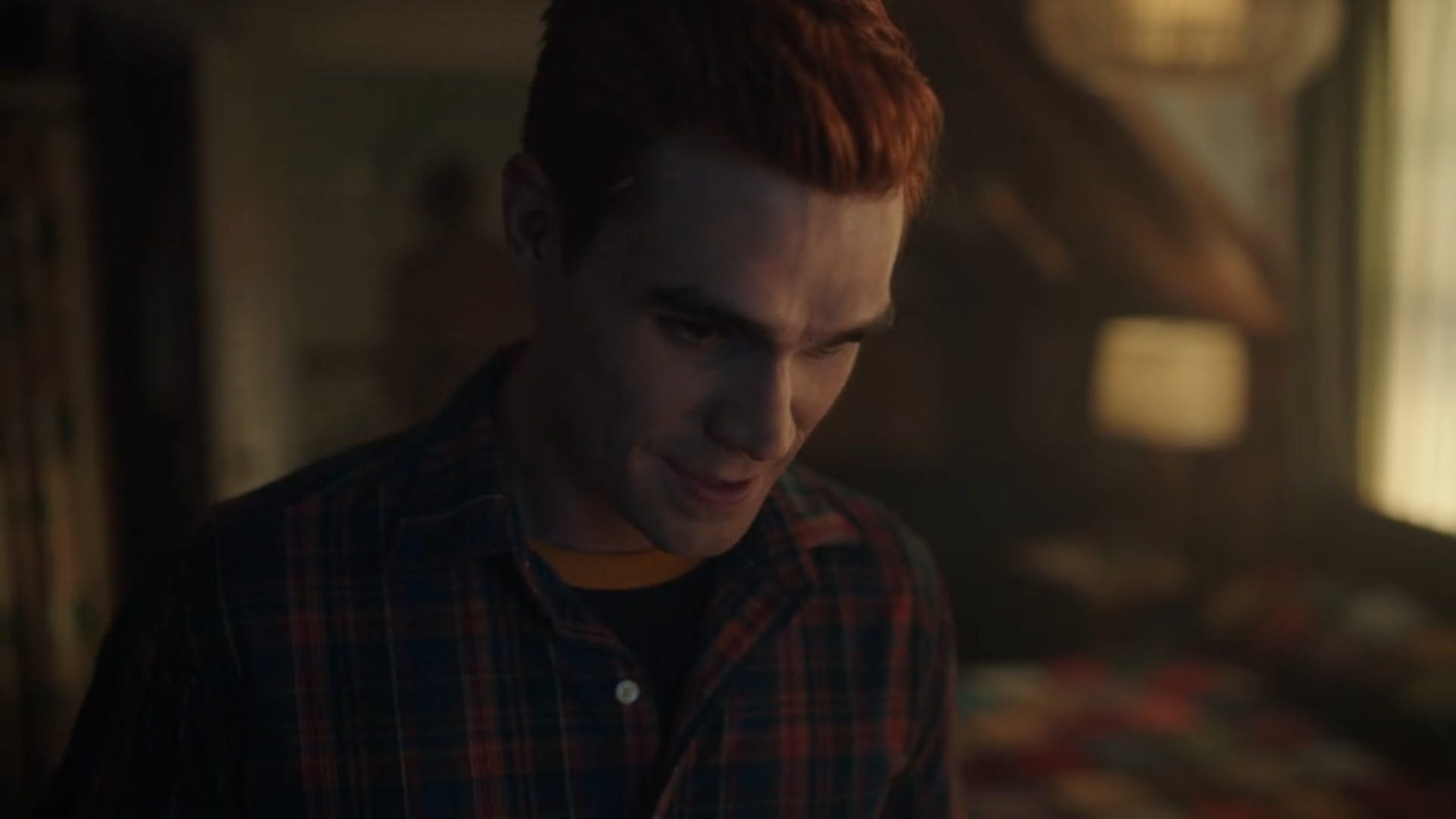
Magic Man tells the amnesiac Betty what would end up happening with Mrs. Andrews, Archie’s mother: she opened a dress shop, and eventually got together with a customer of hers named Brooke. (I guess Archie’s father left them prior to the start of the series.)
Betty hears voices from downstairs and excitedly runs outside. She stupidly blurts out, “You’re alive! And young!” to her mother Alice and aunt Polly. They are confused.
Magic Man tells Betty about their futures: Her mother, currently working as a stewardess, one day had to land the plane when the pilot had a heart attack. She married one of the passengers she saved and travelled the world with him. Aunt Polly, currently working as a stripper named “Polly Amorous”, ended up having twins, Juniper and Dagwood, and stopped performing.
(Does nobody in this town have dads?)
Betty goes to school, because in this version of her teenage body she doesn’t have the mumps after all.
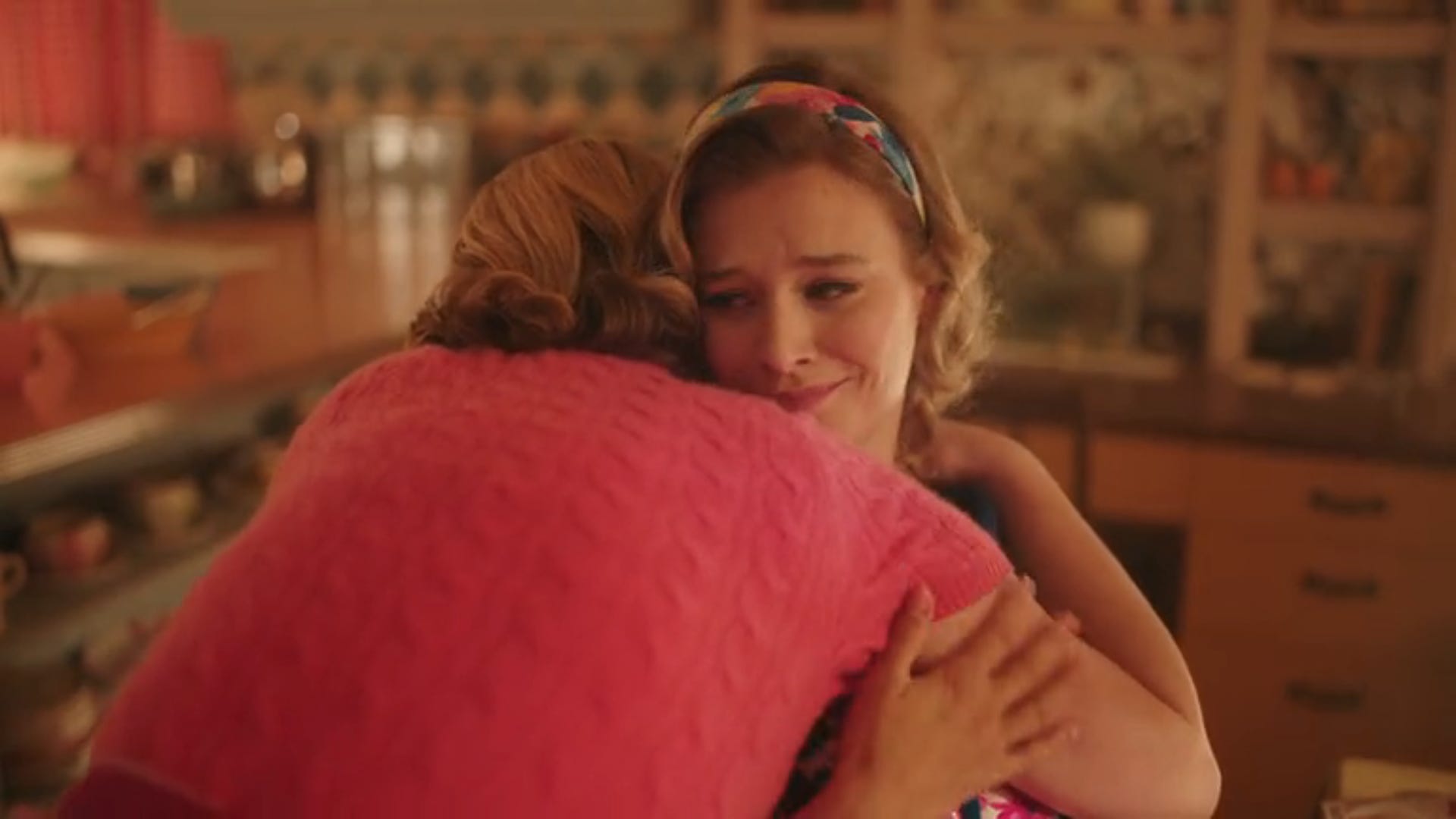
At school she meets Veronica, who looks like a young Morena Baccarin. Veronica is simultaneously Betty’s best friend and subtly hostile to her. I learn the year is 1957. And we finally have the opening credits.
After the credits, “Toni” gets on the PA system and reads “Dreams” by Langston Hughes. Magic Man is about to tell Betty what Toni’s future holds but she stops him.
Betty picks up her yearbook from “Cheryl”, who hates her. She starts going around and getting it signed by her friends.
First, she meets “Fangs”, a musician who has already released a hit single before graduating high school. But Magic Man tells Betty that he will die in a bus crash four weeks after graduation. His girlfriend Midge is either pregnant with or already had his daughter, but she turns out okay thanks to the proceeds from the record sales.
Next, Betty has lunch with “Kevin” and “Clay”, who are going to NYU and Columbia respectively. They’re gay, and a couple, a secret they’re keeping from their parents. Magic Man tells Betty that the two will get an apartment in Harlem together; Kevin will start a theater company; Clay will become a professor; they will die within a few weeks of each other at age 82.
Kevin and Clay spring a surprise on Betty: they know about Betty’s secret, that she, Archie, Veronica, and Jughead have been “a quad” for the whole year. Betty is taken aback – she doesn’t seem to know this secret. Are they leaping to a wrong conclusion? But then again this Betty also couldn’t remember that Fangs had written a hit song. So is this her 87-year-old senility (even though senility doesn’t usually work that way)? Has Magic Man wiped some of her memory? Is she in an alternate version of 1957?
Next, Betty talks to Reggie, during which she suddenly remembers that the secret is true – the four of them have been in a polyamorous relationship all year. Reggie’s jealous: why wasn’t I invited to join in? I would’ve made the time!
Both sides of this conversation are very unusual for 1957. But even more unusual is how the conversation is presented to the viewers. They’re not talking about the foursome like it’s known to us already. So either the show has been keeping viewers ignorant of a major part of the main characters’ lives, or there was a timeskip, perhaps of a full year, between the previous episode and the 1957 scenes of this episode.
Anyway, Magic Man tells Betty that Reggie will be drafted by the Lakers, then eventually return to coach at Riverdale.
Next, Betty sits with Veronica, who is moving to LA to become a movie producer.
Because we’ve met just about everybody else, I’m starting to suspect that Magic Man is Jughead – and moments after I reach this conclusion, the captions identify him as “Angel Jughead”, which sort of ruins my ability to brag about the guess. I’m curious as to the connection between him and the Angel somebody-or-other that Betty mentioned earlier who made her and her friends remember things.
It’s after school. Everybody’s in some sort of restaurant with a bar. Angel Jughead tells Betty what will happen to a bunch of side characters: Cheryl and Toni stayed together and had a son, these other two got married, this one was reincarnated multiple times, these two got murdered…
Betty goes to sit down with the rest of the quad, who are bummed about going their separate ways. Betty drops the (to me) bombshell that she’s known the other characters “across not one, but two lifetimes”, and Jughead confirms that the four of them have already been through high school before.
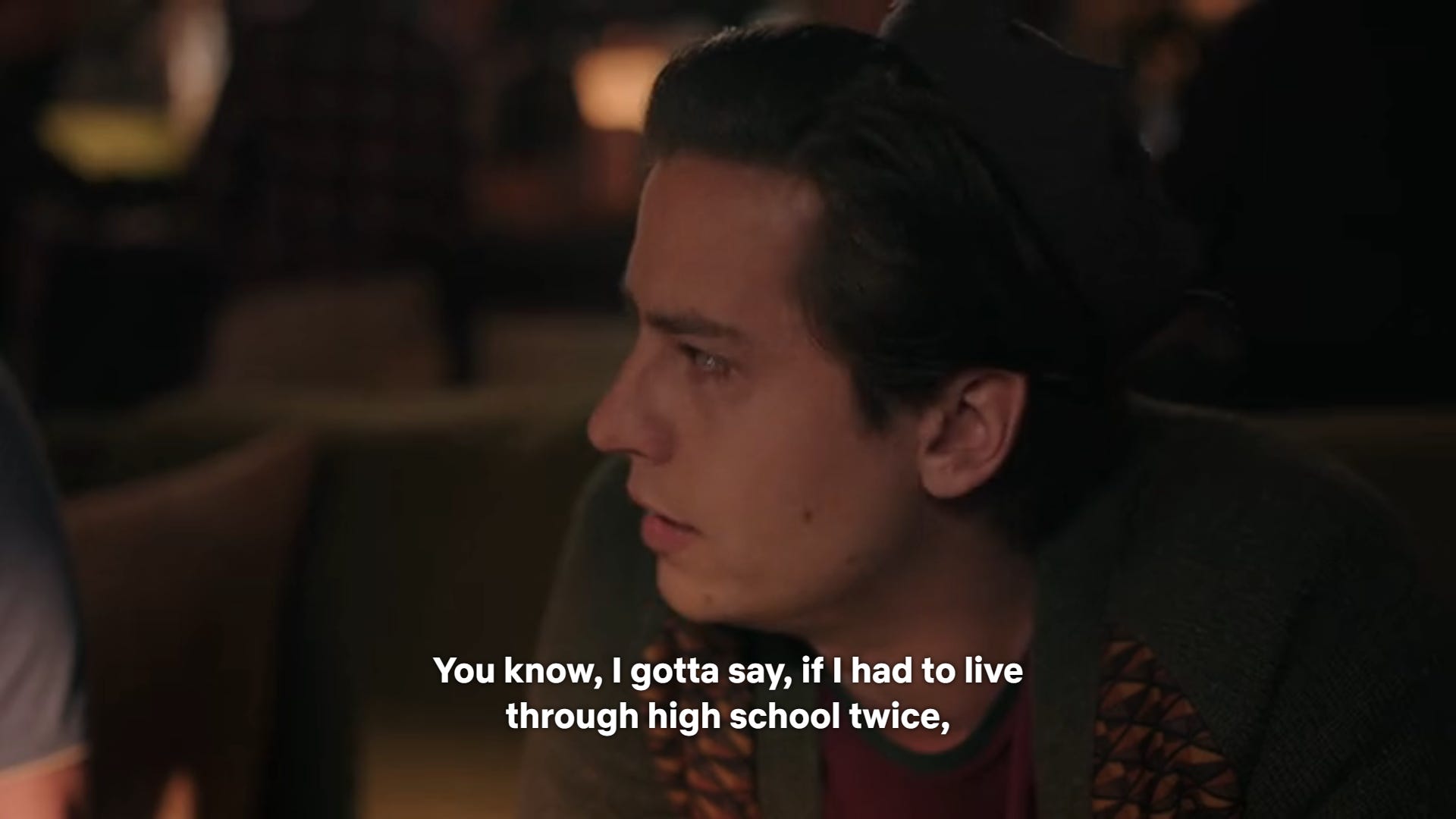
What is that all about? Given how sad they are to leave high school, why are they so sure it won’t happen a third time? (On second thought, it is happening a third time, for Betty, right now. I wonder if the other three got the same offer from other angels in the moments before their deaths, which I bet is what’s happening to Betty right now in 2024.)
It’s late at night. Betty is standing outside (I assume) Veronica’s house, while the other three are inside. She doesn’t want to go in, since it’s too sad: it’s the last time the four of them will ever be together. (A strange worry, because in the original timeline that last meeting would have been the day before.) Angel Jughead convinces her to go inside nevertheless.
Ah, it’s not “the four of them” but rather the entire high school class, celebrating their graduation. Archie stands up in front of everyone and reads out a poem in which some very strange things are mentioned: Betty is a serial killer if you say the word “tangerine”? Veronica was turned into a dialysis machine? Angel Tabitha wipes people’s memories? Cheryl kept someone named Jason captive in a cellar? Fangs stole human organs and put them in a freezer? There are two Reggies? I have no idea what’s going on.
After the party, with Betty getting ready to leave, Archie stops her: he wants the two of them to stay together. But she reveals to him that they don’t end up together. He goes out to build highways and becomes a construction worker and amateur poet, and marries a girl he meets in Modesto, California. (This makes three different characters moving to California. I think the Hollywood-based writers need to get over themselves a bit.) Eventually Archie is buried back home in Riverdale next to his father, so I guess I was wrong about Archie’s father having left.
Anyway, whoever Betty married, it wasn’t Archie. Archie fails to ask any questions about how she knows all this and kisses her goodbye.
It’s the next morning, so it looks like Angel Jughead is giving Betty a bit more time in the past than he originally offered. Betty goes to the grave of Pop Tate, who if I recall correctly ran the soda shop in the comics. Angel Jughead tells her that Tate died at the beginning of their senior year – which strengthens my belief that there has been a year-long timeskip from the previous episode.
“I read your obituary”, Betty tells Angel Jughead. That’s curious: so this isn’t an angel taking Jughead’s form but rather Jughead’s ghost? She says that Jughead started a magazine that is still running after his death.
In return, Angel Jughead tells her her own history: she became a writer, wrote an advice column, started a magazine as well. Ah, and she didn’t get married; Alice’s mother is Betty’s adoptive daughter, Carla.
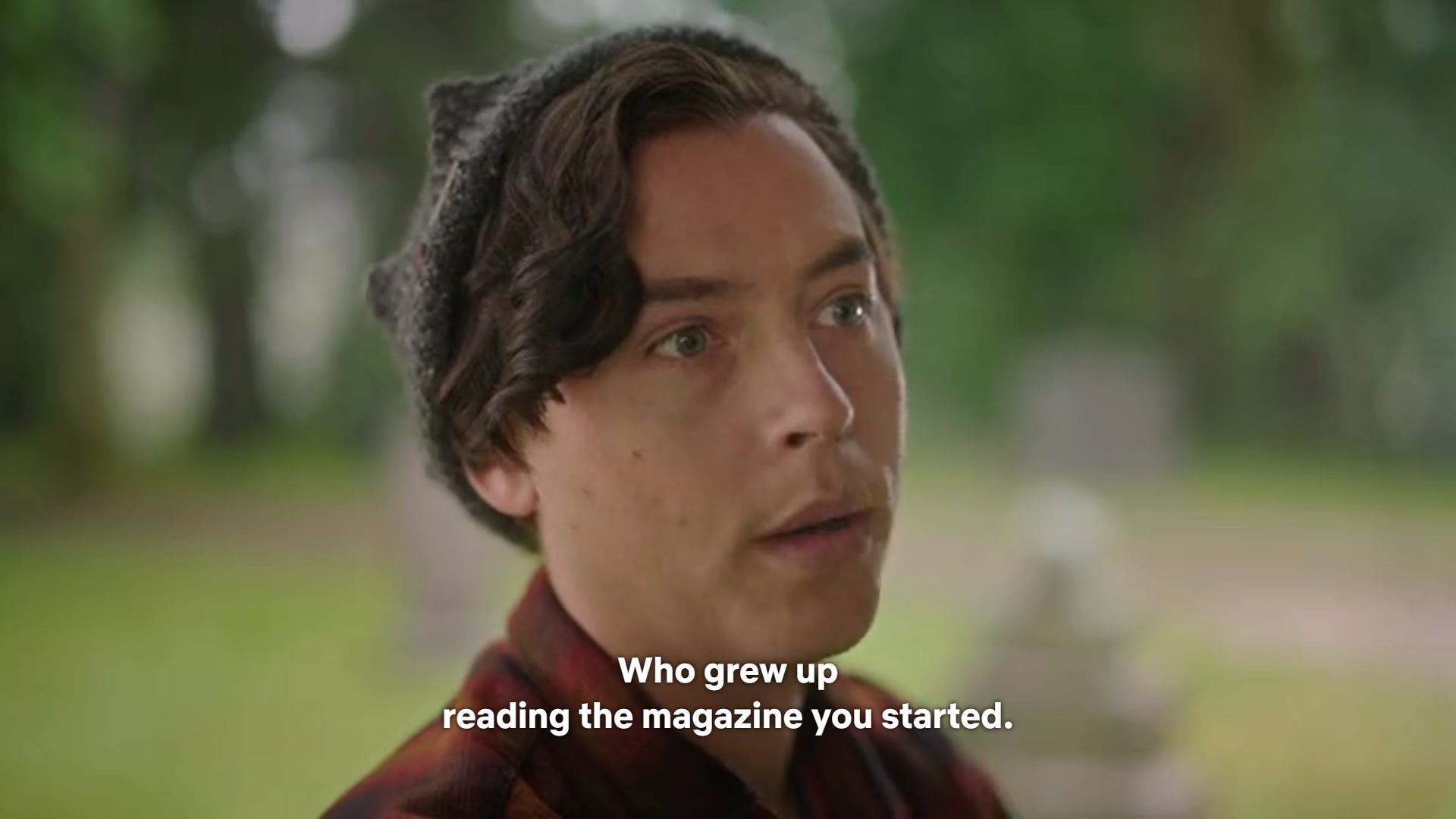
“I wish that we could stay in Riverdale forever, with all our friends, young and beautiful,” says Betty. By the laws of irony this is obviously going to happen at the end of the episode. “I know it’s not possible,” she adds, as if Angel Jughead isn’t doing this for her right now. Bizarrely, he agrees that it’s not possible, but clearly it’s going to happen after she dies tonight in the future.
Ah. I’m wrong. We finally return to 2024, it’s the next morning, and Betty’s still alive, in the car with Alice and Alice’s significant other. The camera takes us through all the sets as Betty’s voiceover says goodbye to each bit of the town she remembers.
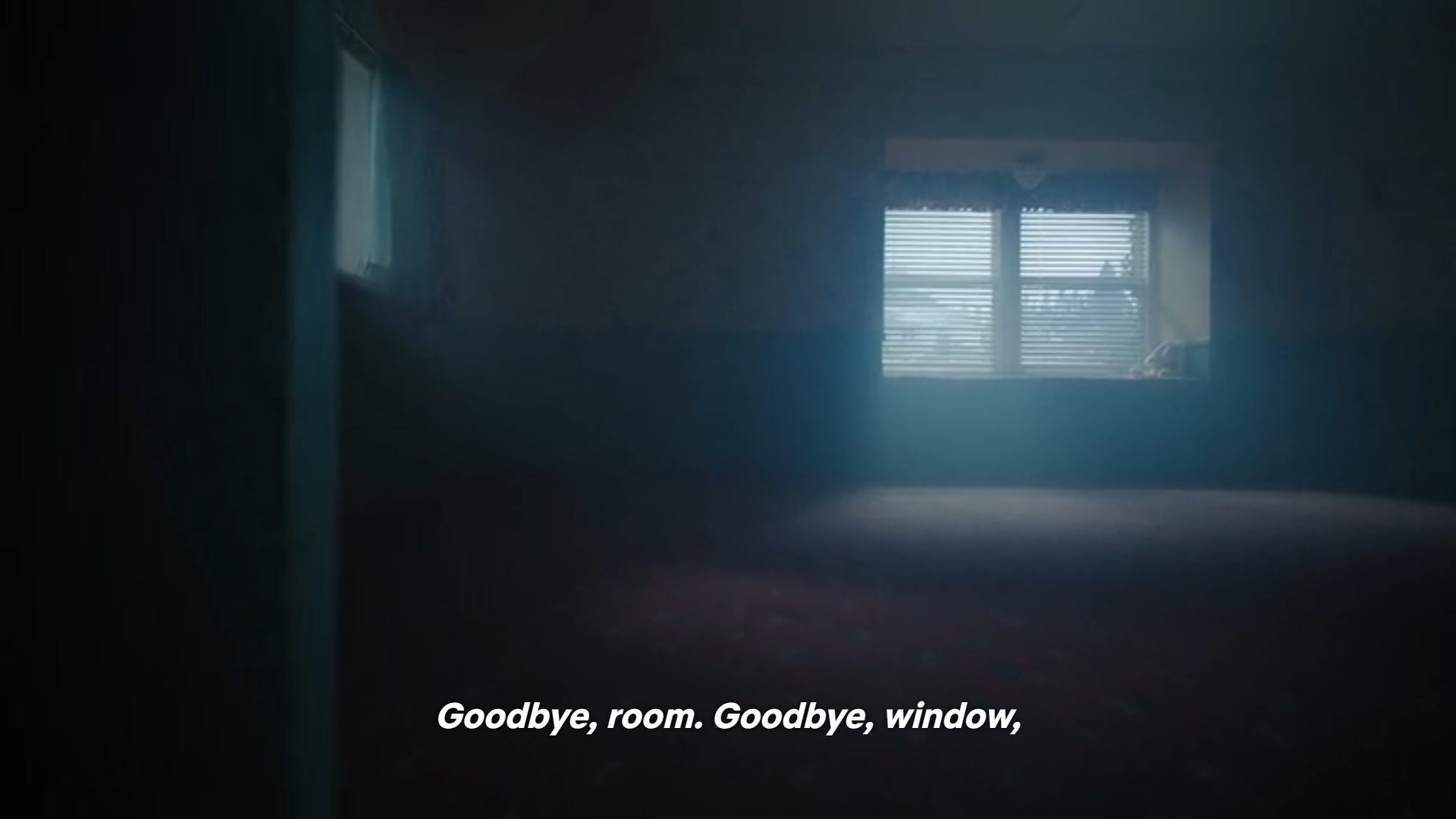
I was close enough: Old Betty dies peacefully in her sleep in the car. And a young Betty gets out of the car and walks across the suddenly-nighttime parking lot into Pop Tate’s. 1950s pop music plays as she hugs each of her friends one by one, even Cheryl.
But now I’m even more confused. Jughead is in Pop Tate’s with Betty, but Angel Jughead is outside the shop still giving the voiceover. So he isn’t the ghost of Jughead?
We close on the sounds of a typewriter clacking. Has the entire episode been fake, an article Jughead made up?
Unresolved questions
Is the angel Jughead’s ghost or isn’t he?
Is the entire episode just a story Jughead made up?
Why didn’t Betty want to hear Toni’s future?
Ratings
Story: 1/10. There was no plot to this episode. But then no plot was ever intended. The entire episode violated “show don’t tell”, and simply told us, one by one, what happened to each character after high school. And yet…
Writing: 6/10. … and yet it somehow works. And works very well. The bittersweet ending that is high school graduation is a common trope in hundreds of television shows and films, and against all that competition Riverdale’s writers hold their own. Each person going their separate ways, closing one book and opening another, the regrets that come with promising to keep in touch but discovering that life often doesn’t afford you that luxury. The script tugs at the heartstrings without becoming too preachy or saccharine.
The writing wasn’t without issues, though. First there is “the Rose from Titanic problem”. Betty is 87 years old when she dies. Even taking into account whatever supernatural shenanigans were going on that made high school last longer for the main characters, she still lived decades upon decades of life after high school. She raised at least one child, had good relationships and bad, had a legacy of activism and written works. Yet her version of the afterlife, the best time in her life, is all the way back in high school?
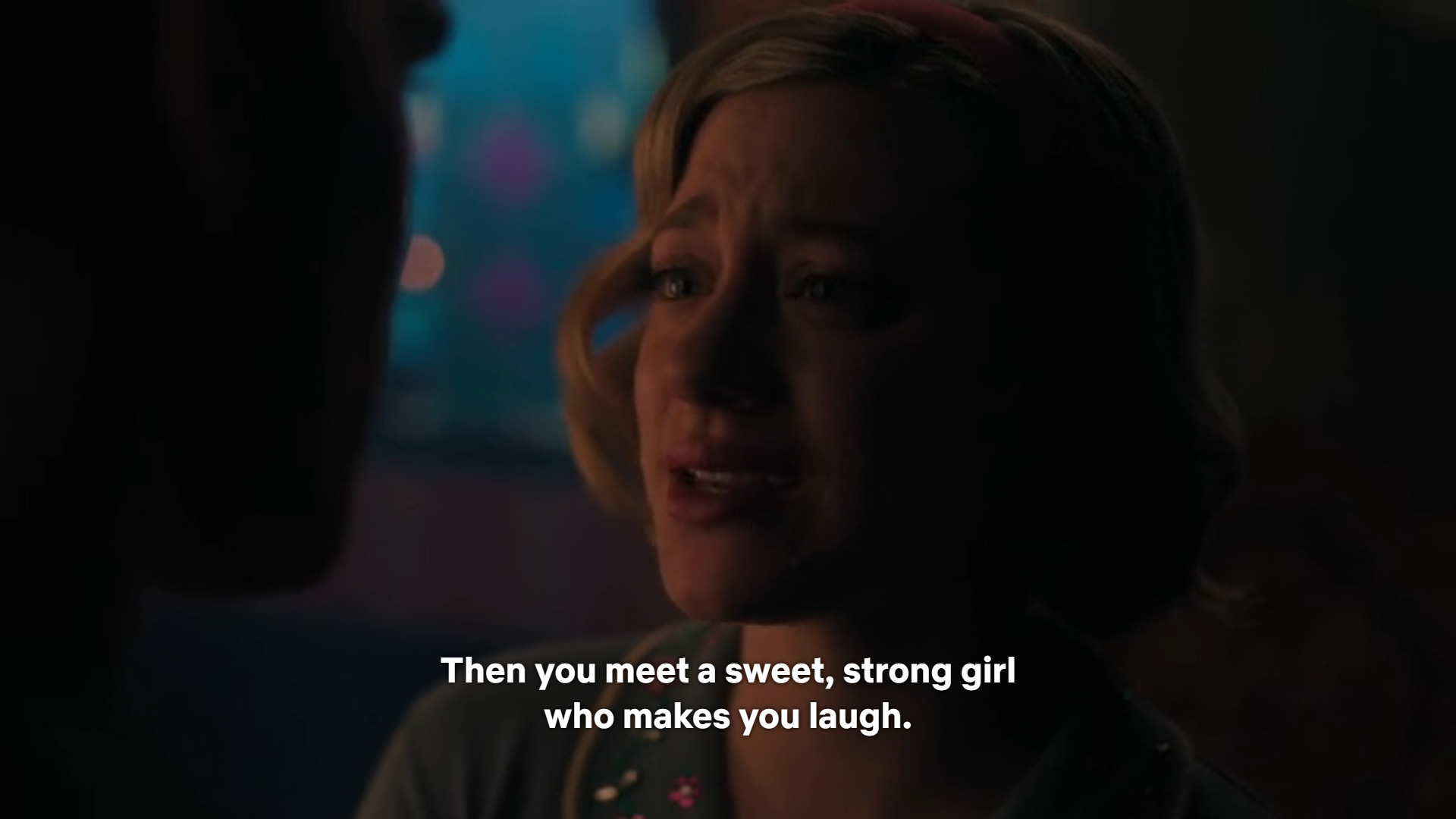
I can understand Fangs, who died only four weeks later, returning forever to the high school that he remembers. But most of the characters have careers, live long and fulfilling lives, accomplishments and families, spouses and children. The writers are basically saying that nothing in adult life will ever be as enjoyable, important, or fulfilling as drinking shakes in Pop Tate’s after a school dance. Is that a good message to send to viewers?
Another issue is the self-contradictory vision of the 1950s that is depicted. Betty makes it clear that Riverdale’s version of the civil rights movement was substantially the same as ours, with Brown v. Board of Education in 1954 and Rosa Parks in 1955. Yet this episode depicts a fully desegregated school in a majority-white suburban neighborhood in 1957, with a black principal who is a main character in the comics and therefore has presumably been in that role since at least 1953. It’s difficult to reconcile those two realities. In our world, school desegregation was a long, painful, and often violent process, and the first voluntary (i.e., non-court-ordered) desegregation in the US didn’t take place until 1964, in Teaneck, NJ. Is the town of Riverdale just twenty years ahead of the rest of the country in racial equality?
Similarly, the outright majority of named characters in the episode, including several adults, are LGBT - yet Kevin and Clay hide their relationship from their parents. It’s possible that in this version of the 1950s homosexuality is fully accepted, and it’s only Kevin and Clay’s parents that are different. But if that were the case, there would be a different set of social pressures on the parents and Kevin and Clay would have no need to hide.
Essentially the writers are trying to eat their cake and have it too: They want their characters heroically fighting for progressive values against a dominant cultural opponent, yet progressive values are universal in those parts of the world that are actually shown on the screen. You can’t have both.
(I can think of perhaps one way to resolve the contradiction. Maybe the series originally took place in the 2010s, and whatever magic made the kids have to relive high school also transplanted their entire town back to the 1950s, making this town a cultural island compared to the rest of the US at the time. But that would require a creative reinterpreting of the scene with Kevin and Clay’s parents.)
And finally, I’m not clear on the rules of time travel. Betty is warned by Angel Jughead that she “won’t just live it, you’ll watch yourself living it”. I’ve run that sentence over in my head several times, but can’t find any interpretation that makes it make sense with what we actually ended up seeing.
Oh, and one more thing: Everyone keeps praising Archie’s poetry, but the one poem he reads out doesn’t scan - not even close - and is altogether awful. But it’s not clear if I should blame this on the writers or the character.
Production: 8/10. The world of the 1950s was well realized. Good camera work and a good score contributed to the tugging at the viewer’s heartstrings, even for somebody who didn’t watch the series and doesn’t have a preexisting emotional connection to the characters.
I have some problems with the casting: Of the four main characters, only Veronica looks even vaguely like her comic counterpart - while the other three look like they should be teaching at the high school rather than attending it. And Reggie looks like he never held a basketball in his life.
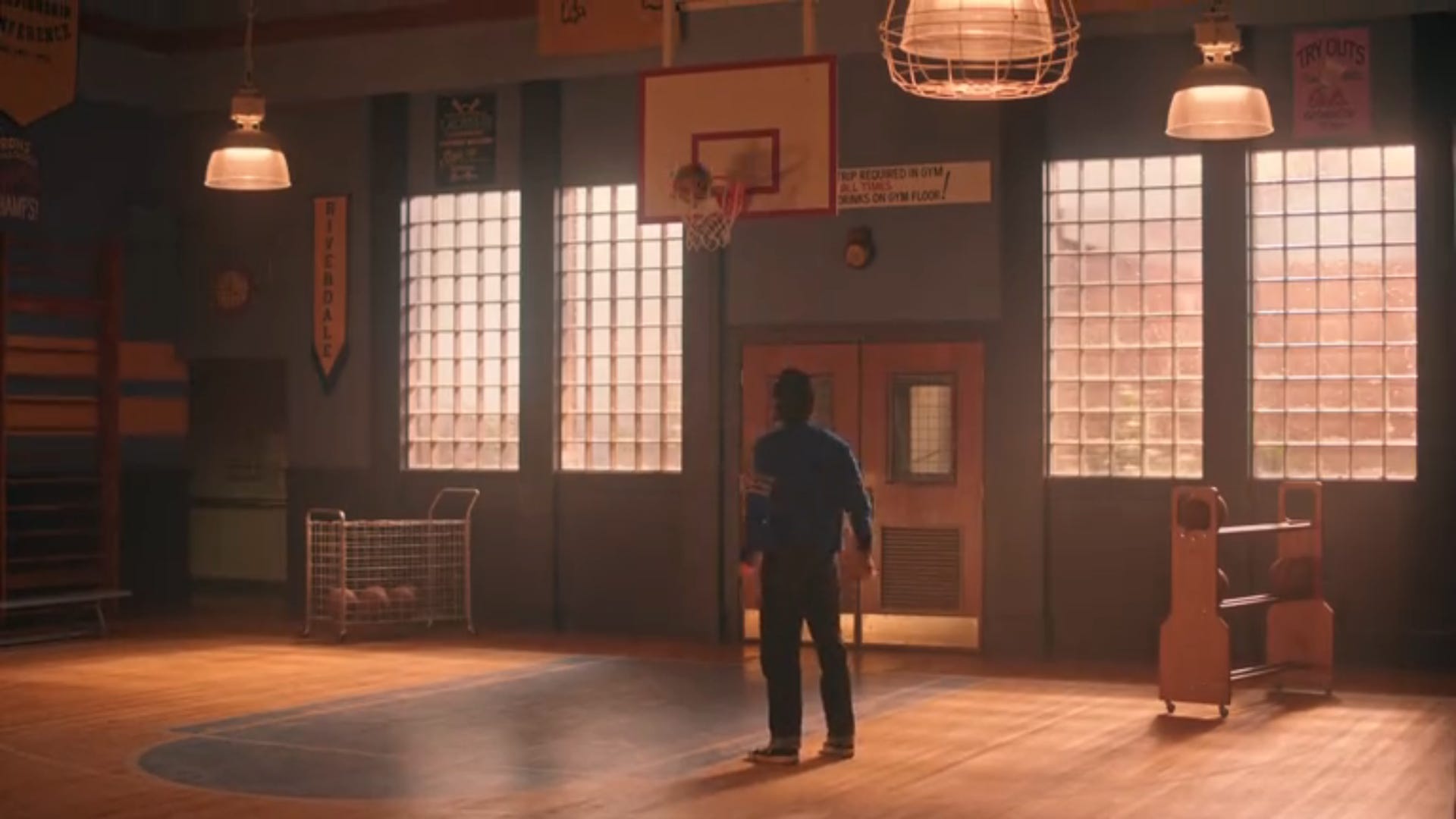
But criticizing casting is not the same as criticizing the performances. Nobody fell short, and I reserve particular praise for the actress playing Betty. She had the unenviable task of taking an extended infodump and presenting it as an emotional rollercoaster, and she pulled it off with deceptive ease.
Characterization: 3/10. There wasn’t much room for getting to know the characters on a personal level in between the factual descriptions of what they did with their lives.
Clarity: 8/10. I’m mystified as to the nature of Angel Jughead. But setting aside that, and the oblique references to really strange things that happened to the characters before this episode, I understood most of what was going on.
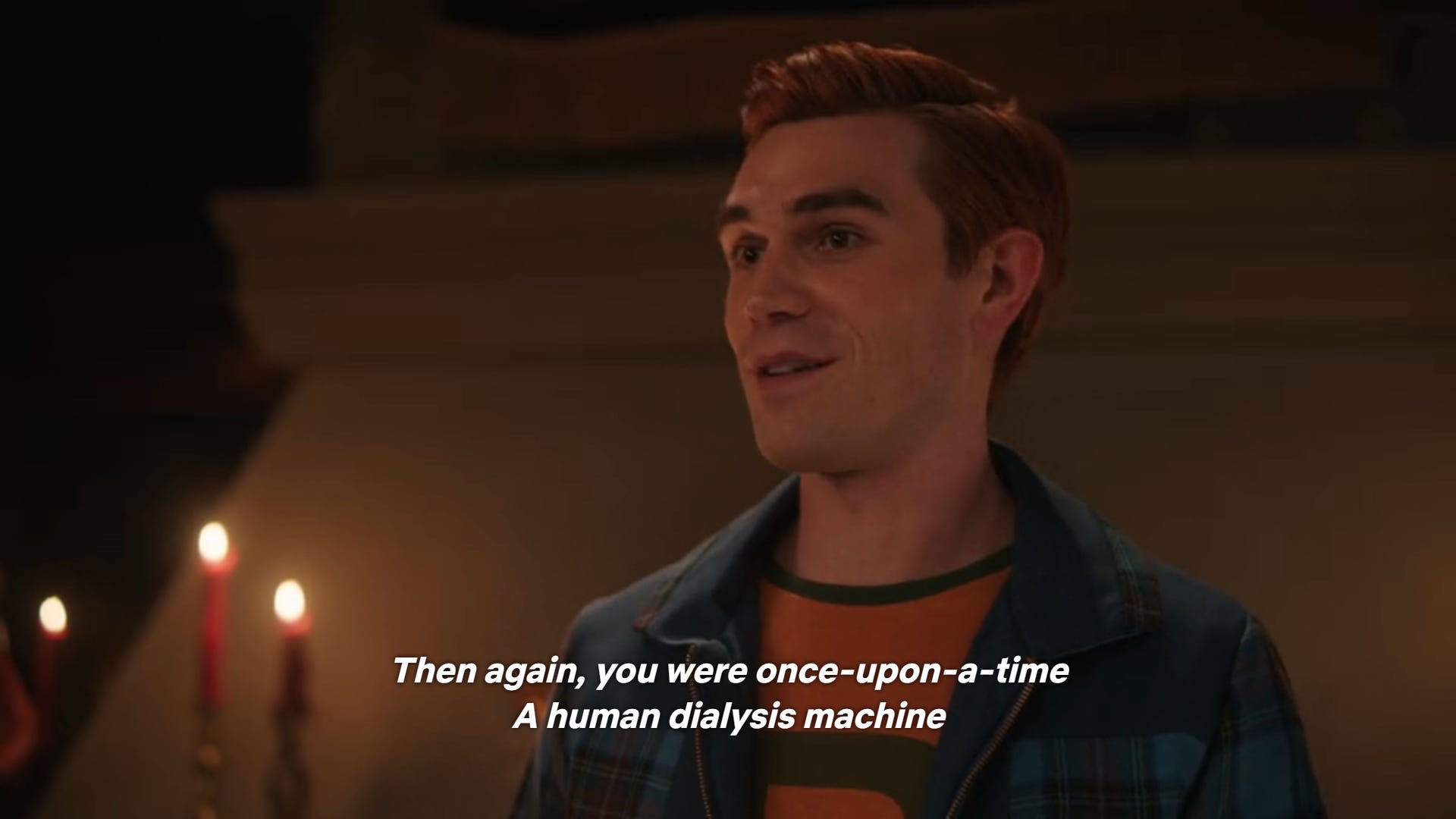
Closure: 10/10. Imagine taking the captions at the end of Fast Times at Ridgemont High and making them dialogue instead. That was this episode in a nutshell. It was built for closure from start to finish – so much so that nothing actually happened in the episode itself.
Do I want to watch the series now?
I can’t really make a judgement on that. There’s no way this episode was representative of what the show was actually like. I’m curious about all the weird stuff that Archie listed in his poem, but I don’t think the episode roped me in enough to decide to watch it rather than just reading about it on Wikipedia.
OK, I felt like I had to step in and try to explain some of this, even if much of the explanation boils down to “this show was f’ing weird.”
So, first off, you guessed right: this show was originally set in the modern day. Seasons 1-4 had the characters in high school, then in early season 5 they graduated and did a time-skip to everyone coming back to Riverdale for various reasons seven years later.
Then… season 6. Hoo boy.
Season 6 started with the 5-episode “Rivervale” arc, which is set in an alternate universe and is basically a mini horror anthology, complete with Jughead in the role of Rod Serling. After that, we supposedly return to Riverdale as normal, except at this point the writers completely run out of fucks to give. Suddenly half the cast has superpowers, Cheryl is a witch, Tabitha is a time-traveling angel, the new Big Bad is an evil immortal dude, the Holy Grail turns up, people come back from the dead willy-nilly, etc. It was wild even for this show, which already had multiple serial killers and an organ-harvesting cult and the Gargoyle King.
At the end of season 6, though, the show gets a soft reboot. For handwavey plot reasons, the town gets sent back in time to the 1950s. Everyone loses their memory of the previous timeline and the show carries on as a period high school drama, until the penultimate episode where Angel Tabitha gives back everyone’s memories but confirms they can’t go back to the old timeline. In a way, that episode was the real finale, and this one is just an epilogue.
Miscellaneous notes:
- Polly is actually Betty’s sister, so they are supposed to appear close in age (though Polly is older).
- Yes, the polyamorous quad was only introduced in the final episode. I think the writers were trying to be edgy, but weren’t actually daring enough to make a full plotline out of it. Or it was their way of trying to placate all the shippers at once.
- I have two theories about the identity of Angel Jughead. The last episode of the Rivervale arc, “The Jughead Paradox”, established an extra Jughead (the Rod Serling narrator one) who is now writing the story of everything that happens in Rivervale. The other possibility is the angel Raphael, who in season 6 appears to Tabitha in the form of several other characters, including Jughead.
- Yes, all the stuff in Archie’s poem happened on the show, and a lot of it even happened pre-Rivervale. The explanations are not going to make any of this sound less nuts.
- The “tangerine” trigger was implanted by the organ-harvesting cult, but in general the show really liked teasing “Dark Betty” and how she had the serial killer gene and was related to serial killers and maybe murdered her childhood cat.
- Season 6 Veronica had poison-based powers, which she was able to use for dialysis to cure Betty’s brother of blood poisoning.
- Jason was Cheryl’s twin. He was murdered in the first episode, so the Jason she was keeping in the cellar was his corpse. I realize that doesn’t make it better.
- Fangs and Kevin were both in the organ-harvesting cult. Poor Kevin; the show wanted the queer rep but never really knew what to do with him.
- The role of Reggie was recast after Season 1. In “The Jughead Paradox”, a multiverse anomaly manifested a second Reggie played by the original actor, and the two Reggies fought to the death for Veronica’s affections. That was a gloriously weird episode and possibly my favorite.
- No Fred Andrews slander! Archie’s dad was on the show for the first three seasons and was one of the more decent and likable characters. The actor who played him, Luke Perry, died suddenly and there was a very moving funeral episode dedicated to him.
- Most of the main characters had dads in the beginning, but many of those actors left the show. Betty’s dad was in the last season, but in the first timeline he was a serial killer, so it probably felt weird to have him in the feel-good finale. I think Kevin’s dad and Archie’s dad-surrogate Uncle Frank are the gay couple who gets murdered.